Blog

  • How AI Servers Stay Cool: The Science Behind Cooling High-Traffic Servers

    How AI Servers Stay Cool: The Science Behind Cooling High-Traffic Servers

    AI servers are the unsung heroes of our increasingly digital world, powering everything from voice assistants to real-time language translations and complex simulations. But these servers don’t just crunch data—they generate massive amounts of heat while doing so. Without efficient cooling systems, their performance would plummet, and hardware could be damaged. So, how do these high-traffic AI servers stay cool? The answer lies in a blend of cutting-edge engineering and clever use of synthetic coolant.

    Why AI Servers Need Specialized Cooling

    AI servers operate at incredibly high intensities, processing vast amounts of data at lightning speed. This constant workload generates significant heat, particularly in GPUs and CPUs designed for AI tasks. Without proper cooling, the heat can cause:

    Thermal throttling, which slows down processing speeds.

    Component degradation, reducing the lifespan of expensive hardware.

    System crashes, leading to downtime and inefficiency.

    Traditional air cooling—using fans and vents—is often insufficient for modern AI server farms because it can’t keep up with the heat density generated by these high-powered machines. That’s where synthetic coolants come in.

    Synthetic Coolants: The Cooling Solution for High-Traffic Servers

    For high-traffic AI servers, synthetic coolant-based systems have become the go-to choice. Here’s why:

    1. Exceptional Heat Transfer

    Synthetic coolants are designed to absorb and dissipate heat far more efficiently than air. Their thermal conductivity is much higher, meaning they can draw heat away from components quickly and consistently. This makes them ideal for high-density server racks where heat build-up can occur in tight spaces.

    2. Immersion Cooling

    In many cutting-edge data centers, servers are entirely submerged in synthetic coolant. This technique, called immersion cooling, ensures that every component is uniformly cooled without the need for fans. The coolant:

    • Completely surrounds the server hardware.

    • Absorbs heat directly from the components.

    • Transfers the heat to external cooling systems via heat exchangers.

    Immersion cooling is not only effective but also reduces noise (no fans!) and energy consumption.

    3. Non-Conductive and Safe

    Synthetic coolants are non-conductive, meaning they don’t interfere with the server’s electronics. This safety factor is crucial for immersion cooling, where the liquid comes into direct contact with the hardware.

    4. Longevity and Stability

    Unlike water, which can corrode components over time, synthetic coolants are chemically stable and resist evaporation. This makes them a long-term solution for data centers, requiring less maintenance and fewer replacements.

    Why Not Water?

    Water cooling is still used in some data centers, particularly in systems with direct-to-chip cooling plates. However, synthetic coolants are often preferred for high-traffic AI servers for several reasons:

    Corrosion Risk: Water can corrode server components without careful treatment.

    Freezing Potential: In colder climates, water systems require antifreeze additives, which complicate maintenance.

    Precision Cooling: Synthetic coolants can be fine-tuned for specific thermal properties, outperforming water in tailored applications.

    Benefits of Synthetic Coolants in AI Data Centers

    The adoption of synthetic coolants isn’t just about keeping servers cool—it also offers broader benefits:

    Energy Efficiency: Immersion cooling systems use less energy than traditional air cooling, reducing operational costs and environmental impact.

    Space Saving: Compact immersion tanks replace bulky air cooling systems, allowing for denser server configurations.

    Sustainability: Some synthetic coolants are recyclable, aligning with eco-friendly goals.

    The Future of AI Server Cooling

    As AI workloads grow in complexity, cooling technologies will continue to evolve. Researchers are already exploring new synthetic coolant formulas that offer even better thermal performance and environmental sustainability. Additionally, advancements in liquid cooling loops and direct-to-chip cooling will ensure that AI servers can keep running at peak performance without overheating.

    Final Thoughts

    AI servers power the technologies shaping our future, and synthetic coolant systems ensure they can do so without breaking a sweat. With their superior heat transfer capabilities, safety, and efficiency, synthetic coolants are the backbone of modern high-traffic server cooling systems. As AI continues to advance, so will the innovations that keep these systems cool, efficient, and ready for whatever comes next.

    Stay tuned for more deep dives into the tech that powers our world—right here on Quantum Pickle!
  • DIY Quantum: Six Fun Physics Experiments You Can Do at Home

    DIY Quantum: Six Fun Physics Experiments You Can Do at Home

    Welcome to the quantum side of curiosity! You don’t need a billion-dollar lab or a team of scientists to dive into the fascinating world of physics. With just a few everyday items, you can explore concepts like light waves, quantum superposition, and even the mysterious dual nature of particles—all from the comfort of your home.

    Let’s get started with some hands-on experiments that are as entertaining as they are educational!

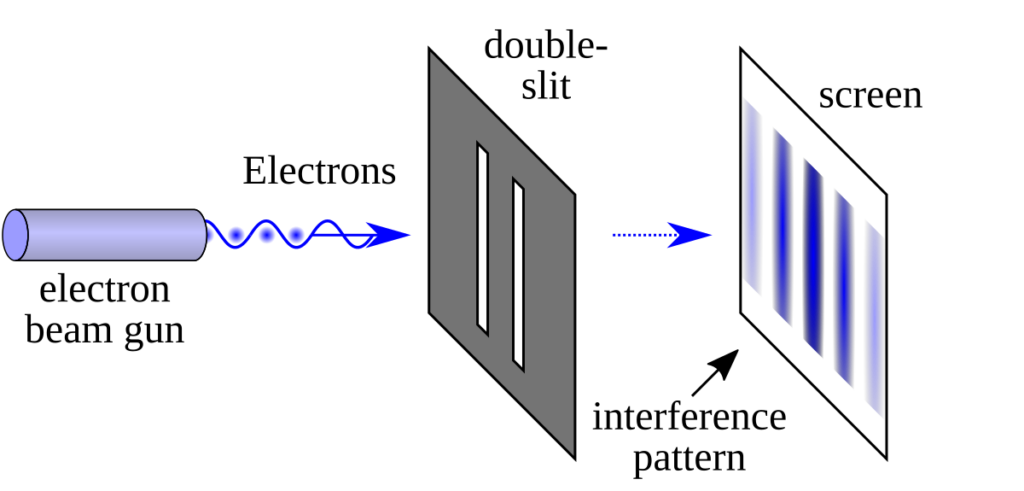
    1. Double-Slit Experiment (A Classic!)

    What You’ll Learn: The dual nature of light—how it behaves like both a particle and a wave.

    What You Need:

    • A laser pointer (red lasers work best).

    • A piece of cardboard.

    • A utility knife or a razor blade (ask an adult if you’re underage).

    • A white wall or screen.

    What to Do:

    1. Cut two very narrow, parallel slits in the cardboard (about 1 mm apart).

    2. Shine the laser through the slits onto a wall or screen.

    3. Observe the pattern: Instead of two lines, you’ll see a series of bright and dark spots—an interference pattern!

    What’s Happening:

    This pattern occurs because light behaves like a wave and interferes with itself. However, if you observe which slit the light passes through (using sensors), the pattern disappears, showing light’s particle nature. That’s quantum physics in action!

    2. The Quantum Levitation Experiment

    What You’ll Learn: Superconductivity and the Meissner Effect.

    What You Need:

    • A small superconductor disk (available online).

    • Liquid nitrogen (handle with care, or find a local science center that lets you try this!).

    • A magnet.

    What to Do:

    1. Place the superconductor disk on a flat surface.

    2. Pour a small amount of liquid nitrogen over it until it cools down (it will emit fog, which looks super cool!).

    3. Carefully place the magnet above the disk—it will levitate!

    What’s Happening:

    When cooled, the superconductor expels magnetic fields, causing the magnet to float in mid-air. This effect is the basis for technologies like maglev trains.

    3. Polarized Light and Sunglasses

    What You’ll Learn: How light waves interact with polarizing filters.

    What You Need:

    • Two pairs of polarized sunglasses.

    • A flashlight or bright light source.

    What to Do:

    1. Hold one pair of sunglasses in front of the light source.

    2. Rotate the second pair of sunglasses and look through both lenses.

    3. Notice how the light dims as you rotate—at 90 degrees, it will completely disappear!

    What’s Happening:

    Polarized lenses filter light waves in a specific orientation. When you overlap two lenses at 90 degrees, they block all light, demonstrating how polarization works. This is why polarized sunglasses are great for reducing glare!

    4. Quantum Tunneling With Thin Soap Films

    What You’ll Learn: The concept of quantum tunneling.

    What You Need:

    • A soap solution (dish soap + water).

    • A wire loop (like a bubble wand).

    • A flashlight.

    What to Do:

    1. Dip the wire loop in the soap solution to create a thin film.

    2. Shine the flashlight on the soap film and observe the colorful patterns.

    3. Watch closely as thinner parts of the film vanish while thicker parts remain.

    What’s Happening:

    The thin film’s colors result from light interference, but when the film gets too thin, the light “tunnels” through it, creating a fascinating display of quantum tunneling.

    5. Entanglement (Sort of!) With Spinning Coins

    What You’ll Learn: The concept of quantum entanglement, explained through correlation.

    What You Need:

    • Two identical coins.

    What to Do:

    1. Flip both coins at the same time and note the outcomes (heads/tails).

    2. Now spin both coins on a smooth surface and let them collide lightly.

    3. Observe how their spins and outcomes become correlated—they often stop in the same state!

    What’s Happening:

    While not true quantum entanglement, this demonstrates how systems can become correlated through interaction. In real quantum physics, particles can influence each other instantly, no matter the distance.

    6. Quantum Chromaticity With CDs

    What You’ll Learn: How light reflects and refracts on surfaces to create colors.

    What You Need:

    • An old CD or DVD.

    • A flashlight.

    What to Do:

    1. Shine the flashlight at the CD at an angle.

    2. Observe the rainbow of colors reflected on the wall or ceiling.

    What’s Happening:

    The grooves on the CD act as a diffraction grating, splitting white light into its component colors. This principle is a key part of how scientists study the quantum properties of light.

    Closing Thoughts

    The world of quantum physics is mysterious, mind-blowing, and surprisingly accessible! These simple experiments give you a taste of the incredible phenomena that scientists explore every day. So grab your gear, embrace your inner mad scientist, and start experimenting. Who knows—you might just stumble upon the next big discovery!

    And remember, at Quantum Pickle, we love hearing about your adventures. Share your results (and any glowing pickles you find) with us in the comments below!

    Stay curious,

    The Quantum Pickle Team

  • The Quantum Pickle Effect: Why Weird Ideas Make the Best Innovations

    The Quantum Pickle Effect: Why Weird Ideas Make the Best Innovations

    Welcome to the very first blog post on Quantum Pickle, where science, creativity, and a touch of absurdity collide! We’re thrilled to have you join us on this journey into the strange and wonderful world of unconventional ideas.

    At Quantum Pickle, we believe the best ideas often come from the weirdest places. Take quantum physics, for example—a field that once sounded like science fiction but has revolutionized the way we see the universe. Pair that with a pickle, the humble snack that has stood the test of time, and you’ve got a metaphor for innovation: odd, unexpected, but absolutely game-changing.

    Why Embrace the Unconventional?

    The world of science and technology thrives on thinking differently. Whether it’s exploring the quantum realm or creating revolutionary gadgets, breakthroughs happen when we challenge the norm. And it’s not just scientists and inventors—history is filled with quirky ideas that changed the world.

    Einstein’s Crazy Thought Experiments: What would the world look like if you were riding a beam of light? This seemingly odd question helped lay the foundation for modern physics.

    The Microwave Oven: Accidentally discovered when a candy bar melted in a radar engineer’s pocket. Who knew lunch could inspire a kitchen revolution?

    Pickles and Electricity: Yes, pickles glow when electrified—proof that even the most unexpected things can light up the room (or at least spark curiosity).

    Our Take on the Quantum Pickle Effect

    At Quantum Pickle, we aim to shine a light on the ideas, experiments, and innovations that others might overlook. Whether it’s a bizarre thought experiment, a fun DIY science project, or exploring the possibilities of quantum computing, we’re here to celebrate curiosity in all its forms.

    Here’s what you can expect from our blog:

    1. Deep Dives into Science and Tech: Simplified yet fascinating explanations of complex topics.

    2. Quirky Experiments and DIYs: Fun ways to explore science at home.

    3. The Pickle Connection: Occasionally, we’ll find a way to connect it all back to pickles—because why not?

    Join the Quantum Revolution

    We’re just getting started, but we’re excited about where this journey will take us. Have a weird idea? An experiment you’ve always wanted to try? Or maybe you just want to learn something new? Stick around—there’s plenty of quantum, pickles, and everything in between coming your way.

    Let’s embrace the unconventional, explore the absurd, and redefine what’s possible—one Quantum Pickle at a time.

    Feel free to share your thoughts or suggest topics for future posts. After all, every big idea starts with a single spark (or a glowing pickle).

    Stay curious,

    The Quantum Pickle Team

  • Hello world!

    Welcome to WordPress. This is your first post. Edit or delete it, then start writing!