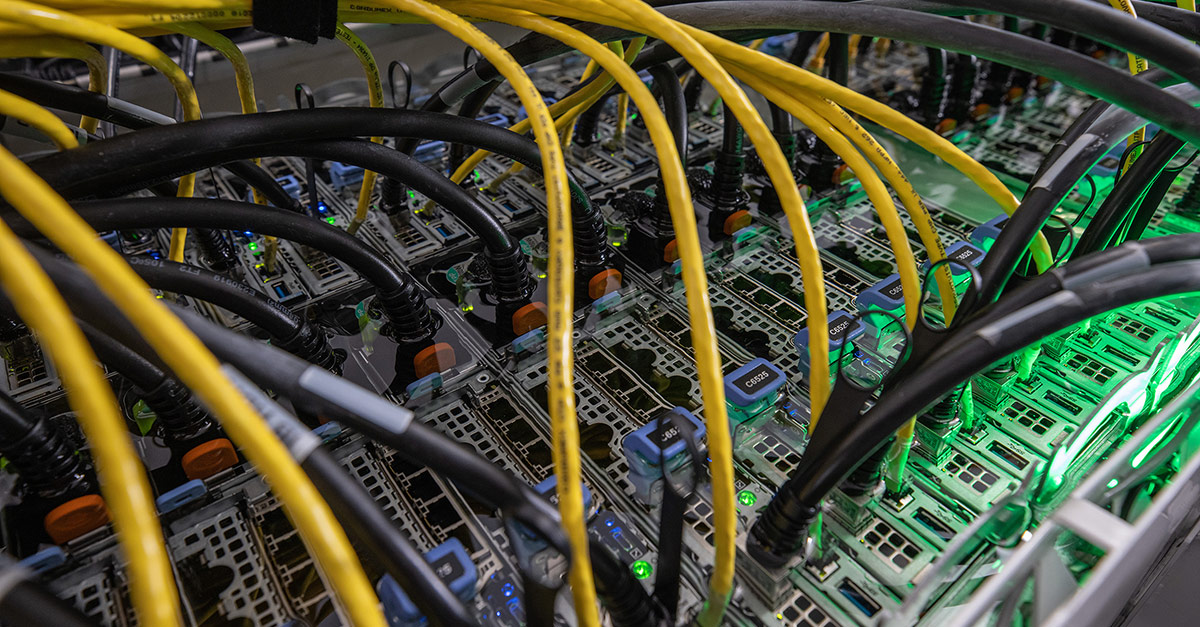
AI servers are the unsung heroes of our increasingly digital world, powering everything from voice assistants to real-time language translations and complex simulations. But these servers don’t just crunch data—they generate massive amounts of heat while doing so. Without efficient cooling systems, their performance would plummet, and hardware could be damaged. So, how do these high-traffic AI servers stay cool? The answer lies in a blend of cutting-edge engineering and clever use of synthetic coolant.
Why AI Servers Need Specialized Cooling
AI servers operate at incredibly high intensities, processing vast amounts of data at lightning speed. This constant workload generates significant heat, particularly in GPUs and CPUs designed for AI tasks. Without proper cooling, the heat can cause:
• Thermal throttling, which slows down processing speeds.
• Component degradation, reducing the lifespan of expensive hardware.
• System crashes, leading to downtime and inefficiency.
Traditional air cooling—using fans and vents—is often insufficient for modern AI server farms because it can’t keep up with the heat density generated by these high-powered machines. That’s where synthetic coolants come in.
Synthetic Coolants: The Cooling Solution for High-Traffic Servers
For high-traffic AI servers, synthetic coolant-based systems have become the go-to choice. Here’s why:
1. Exceptional Heat Transfer
Synthetic coolants are designed to absorb and dissipate heat far more efficiently than air. Their thermal conductivity is much higher, meaning they can draw heat away from components quickly and consistently. This makes them ideal for high-density server racks where heat build-up can occur in tight spaces.
2. Immersion Cooling
In many cutting-edge data centers, servers are entirely submerged in synthetic coolant. This technique, called immersion cooling, ensures that every component is uniformly cooled without the need for fans. The coolant:
• Completely surrounds the server hardware.
• Absorbs heat directly from the components.
• Transfers the heat to external cooling systems via heat exchangers.
Immersion cooling is not only effective but also reduces noise (no fans!) and energy consumption.
3. Non-Conductive and Safe
Synthetic coolants are non-conductive, meaning they don’t interfere with the server’s electronics. This safety factor is crucial for immersion cooling, where the liquid comes into direct contact with the hardware.
4. Longevity and Stability
Unlike water, which can corrode components over time, synthetic coolants are chemically stable and resist evaporation. This makes them a long-term solution for data centers, requiring less maintenance and fewer replacements.
Why Not Water?
Water cooling is still used in some data centers, particularly in systems with direct-to-chip cooling plates. However, synthetic coolants are often preferred for high-traffic AI servers for several reasons:
• Corrosion Risk: Water can corrode server components without careful treatment.
• Freezing Potential: In colder climates, water systems require antifreeze additives, which complicate maintenance.
• Precision Cooling: Synthetic coolants can be fine-tuned for specific thermal properties, outperforming water in tailored applications.
Benefits of Synthetic Coolants in AI Data Centers
The adoption of synthetic coolants isn’t just about keeping servers cool—it also offers broader benefits:
• Energy Efficiency: Immersion cooling systems use less energy than traditional air cooling, reducing operational costs and environmental impact.
• Space Saving: Compact immersion tanks replace bulky air cooling systems, allowing for denser server configurations.
• Sustainability: Some synthetic coolants are recyclable, aligning with eco-friendly goals.
The Future of AI Server Cooling
As AI workloads grow in complexity, cooling technologies will continue to evolve. Researchers are already exploring new synthetic coolant formulas that offer even better thermal performance and environmental sustainability. Additionally, advancements in liquid cooling loops and direct-to-chip cooling will ensure that AI servers can keep running at peak performance without overheating.
Final Thoughts
AI servers power the technologies shaping our future, and synthetic coolant systems ensure they can do so without breaking a sweat. With their superior heat transfer capabilities, safety, and efficiency, synthetic coolants are the backbone of modern high-traffic server cooling systems. As AI continues to advance, so will the innovations that keep these systems cool, efficient, and ready for whatever comes next.
Stay tuned for more deep dives into the tech that powers our world—right here on Quantum Pickle!
Leave a Reply
You must be logged in to post a comment.