Welcome to the quantum side of curiosity! You don’t need a billion-dollar lab or a team of scientists to dive into the fascinating world of physics. With just a few everyday items, you can explore concepts like light waves, quantum superposition, and even the mysterious dual nature of particles—all from the comfort of your home.
Let’s get started with some hands-on experiments that are as entertaining as they are educational!
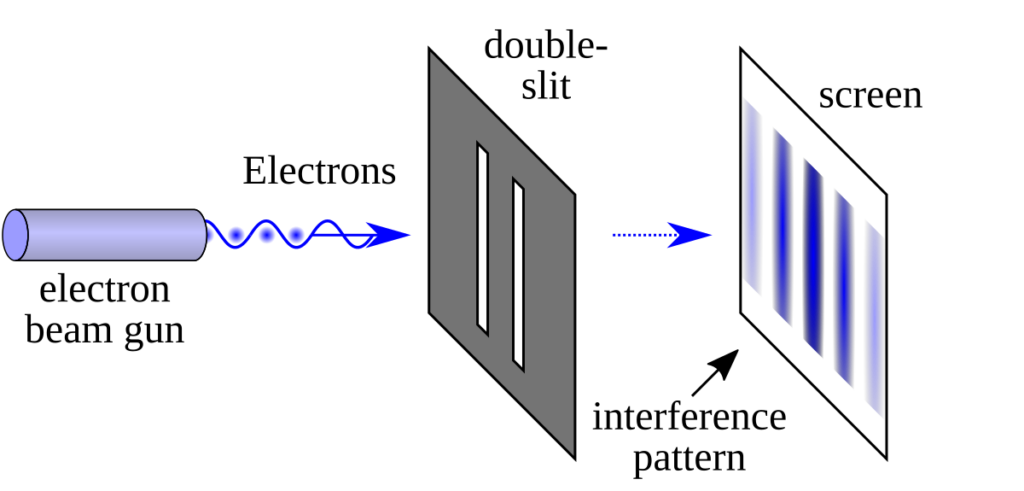
1. Double-Slit Experiment (A Classic!)
What You’ll Learn: The dual nature of light—how it behaves like both a particle and a wave.
What You Need:
• A laser pointer (red lasers work best).
• A piece of cardboard.
• A utility knife or a razor blade (ask an adult if you’re underage).
• A white wall or screen.
What to Do:
1. Cut two very narrow, parallel slits in the cardboard (about 1 mm apart).
2. Shine the laser through the slits onto a wall or screen.
3. Observe the pattern: Instead of two lines, you’ll see a series of bright and dark spots—an interference pattern!
What’s Happening:
This pattern occurs because light behaves like a wave and interferes with itself. However, if you observe which slit the light passes through (using sensors), the pattern disappears, showing light’s particle nature. That’s quantum physics in action!
2. The Quantum Levitation Experiment
What You’ll Learn: Superconductivity and the Meissner Effect.
What You Need:
• A small superconductor disk (available online).
• Liquid nitrogen (handle with care, or find a local science center that lets you try this!).
• A magnet.
What to Do:
1. Place the superconductor disk on a flat surface.
2. Pour a small amount of liquid nitrogen over it until it cools down (it will emit fog, which looks super cool!).
3. Carefully place the magnet above the disk—it will levitate!
What’s Happening:
When cooled, the superconductor expels magnetic fields, causing the magnet to float in mid-air. This effect is the basis for technologies like maglev trains.
3. Polarized Light and Sunglasses
What You’ll Learn: How light waves interact with polarizing filters.
What You Need:
• Two pairs of polarized sunglasses.
• A flashlight or bright light source.
What to Do:
1. Hold one pair of sunglasses in front of the light source.
2. Rotate the second pair of sunglasses and look through both lenses.
3. Notice how the light dims as you rotate—at 90 degrees, it will completely disappear!
What’s Happening:
Polarized lenses filter light waves in a specific orientation. When you overlap two lenses at 90 degrees, they block all light, demonstrating how polarization works. This is why polarized sunglasses are great for reducing glare!
4. Quantum Tunneling With Thin Soap Films
What You’ll Learn: The concept of quantum tunneling.
What You Need:
• A soap solution (dish soap + water).
• A wire loop (like a bubble wand).
• A flashlight.
What to Do:
1. Dip the wire loop in the soap solution to create a thin film.
2. Shine the flashlight on the soap film and observe the colorful patterns.
3. Watch closely as thinner parts of the film vanish while thicker parts remain.
What’s Happening:
The thin film’s colors result from light interference, but when the film gets too thin, the light “tunnels” through it, creating a fascinating display of quantum tunneling.
5. Entanglement (Sort of!) With Spinning Coins
What You’ll Learn: The concept of quantum entanglement, explained through correlation.
What You Need:
• Two identical coins.
What to Do:
1. Flip both coins at the same time and note the outcomes (heads/tails).
2. Now spin both coins on a smooth surface and let them collide lightly.
3. Observe how their spins and outcomes become correlated—they often stop in the same state!
What’s Happening:
While not true quantum entanglement, this demonstrates how systems can become correlated through interaction. In real quantum physics, particles can influence each other instantly, no matter the distance.
6. Quantum Chromaticity With CDs
What You’ll Learn: How light reflects and refracts on surfaces to create colors.
What You Need:
• An old CD or DVD.
• A flashlight.
What to Do:
1. Shine the flashlight at the CD at an angle.
2. Observe the rainbow of colors reflected on the wall or ceiling.
What’s Happening:
The grooves on the CD act as a diffraction grating, splitting white light into its component colors. This principle is a key part of how scientists study the quantum properties of light.
Closing Thoughts
The world of quantum physics is mysterious, mind-blowing, and surprisingly accessible! These simple experiments give you a taste of the incredible phenomena that scientists explore every day. So grab your gear, embrace your inner mad scientist, and start experimenting. Who knows—you might just stumble upon the next big discovery!
And remember, at Quantum Pickle, we love hearing about your adventures. Share your results (and any glowing pickles you find) with us in the comments below!
Stay curious,
The Quantum Pickle Team
Leave a Reply
You must be logged in to post a comment.